


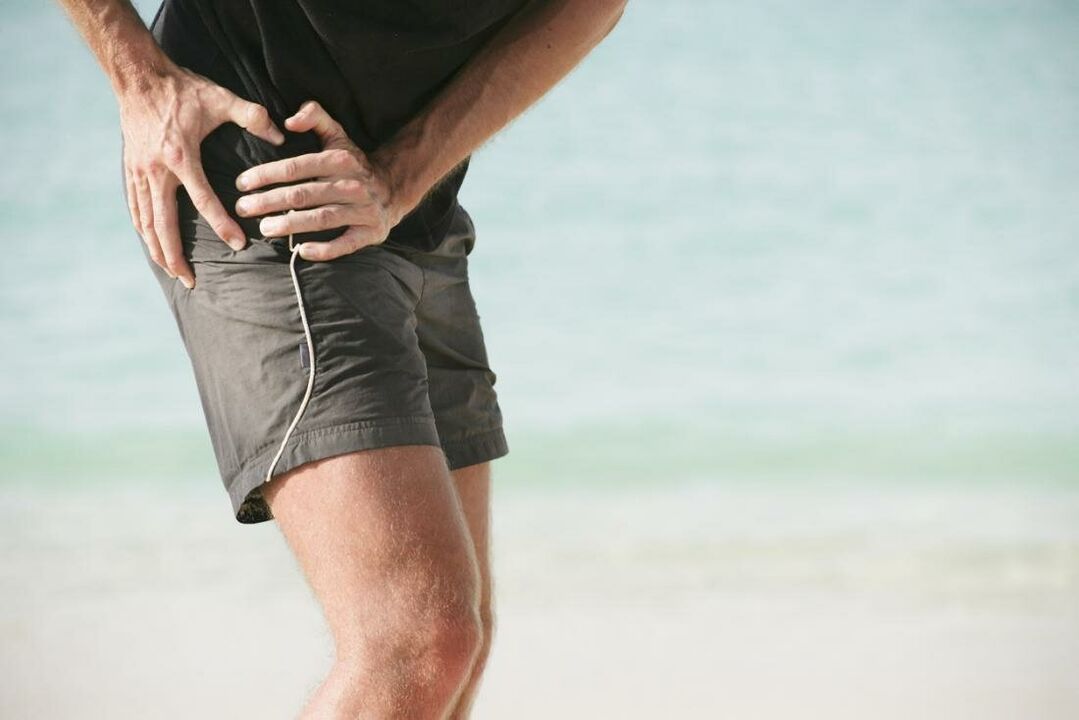
Coxarthrosis or arthrosis of the hip joint is a degenerative-dystrophic disease that causes loss of elasticity and destruction of the cartilage tissue, premature wear of the joint of the same name.Arthrosis is considered an age-related problem, which is confirmed by world statistics: after 40 years, every second person is diagnosed, and in about 70 cases, pathology is detected in 80% of cases.Structural changes in the hip region occur 2.5 times more often in women than in men.
Causes of the disease
The hip joint is formed by the acetabulum, which surrounds the head of the femur.The greater trochanter is attached to the articular head, surrounded by a synovial bursa with a thick mucus-like mass.It is the synovium that nourishes the hip cartilages and allows them to slide easily between each other without noise or pain.An age-related decrease in the production of synovial fluid and changes in its viscosity are the main causes of hip joint arthrosis.
Coxarthrosis of the mobile joints in the hip area occurs in the following cases:
- Perthes disease.
- Hip dysplasia.
- Reactive or infectious coxitis.
- Metabolic disorders.Diabetes mellitus and gout can cause arthrosis.
- Chondromatosis of the joints.The disease is characterized by the formation of loose intra-articular bodies that damage the hyaline cartilage.
- Mechanical injuries.This includes fracture or dislocation of the hip (including congenital), rupture of the joint capsule, and frequent microtrauma of the joints.
People who are overweight and have bad habits are at risk.Connective tissue wears down quickly in professional runners or weightlifters, and athletes are not immune to articular cartilage displacement and hip muscle tears.Arthrosis of the hip joint itself is not hereditary, but the structural characteristics of the bone tissue or slow metabolism are genetically determined.
The course of the disease
First of all, arthrosis affects the large joints of the bones of the pelvis and knee joints (gonarthrosis);they are the ones who carry a huge load when moving.In the period of exacerbation, acute arthrosis occurs, then palpation of joint and hip tissue is accompanied by pain.In the case of incomplete or incorrect fusion of the femur after injury, a neoarthrosis or pseudo-union filled with connective tissue, not callus, occurs.
There are arthrosis of the hip joint of the 1st, 2nd and 3rd degree, each stage of the disease has its own characteristics:
- Grade 1 arthrosis develops slowly without affecting the mobility of joint structures, muscle tone is normal.In the early stage of coxarthrosis, the disease can be detected only by X-rays.
- Secondary osteoarthritis of the hip joint is accompanied by severe pain in the thigh area, sometimes a crackling sound is heard in the joint.With arthrosis, it is difficult to rotate the hip and move to the side, the joint space narrows, the tone of the thigh muscles weakens.A contracture begins to form.
- With 3rd degree coxarthrosis, the pain syndrome is pronounced.Due to the atrophy of the muscles of the hip area and the expansion of the neck of the femur, the leg is shortened.The patient uses support while walking.Due to arthrosis, the joint cavity may disappear completely, in which case they speak of bone ankylosis.
In clinical practice, doctors regularly encounter the attractive type of coxarthrosis (characteristic of old people) and post-infectious arthrosis of the hip joint.There is a risk of dyshormonal coxarthrosis in patients taking corticosteroids and antidepressants;this type of arthrosis also affects the joints of women during menopause.With arthrosis-arthritis, the inflammatory process prevails in the hip joint, not degenerative.
If the etiology of the disease is not determined, we speak of primary or idiopathic coxarthrosis.Usually, the disease affects the joints of people over 50 years old.Secondary arthrosis develops at a young age;as a rule, arthrosis of the left or right hip joint is diagnosed (unilateral coxarthrosis).
Symptoms
Symptoms of arthrosis of the hip joint do not bother the patient at first, only sometimes long-term loads or awkward movements in the affected area remind of the problem.
Coxarthrosis of the hip joint manifests itself:
- Pain in the hip area.The intensity and nature of joint pain depends on the stage of arthrosis and weather conditions.
- Increase in body temperature.With arthrosis of one or two hip joints, shaking and swelling of the joints is observed.
- Weakening and subsequent atrophy of the muscles of the hip area.
- A distinct creaking sound in the joints.A possible sign of coxarthrosis, but not mandatory.
- Lameness.Due to the destruction of the hip bone with arthrosis, an uncertain, "duck" gait occurs.
Those who suffer from coxarthrosis often feel pain that spreads to the kneecap, so an inexperienced doctor can make a wrong diagnosis after listening to the patient's complaints and delay the healing process for months.
Diagnostics
Arthrosis is diagnosed by a rheumatologist, traumatologist or orthopedist.After talking with the patient, the doctor conducts an external examination of the thigh area, studies the mobility of the legs and evaluates the gait of the patient with coxarthrosis.
The most effective methods for diagnosing arthrosis include:
- General and biochemical blood test.
- Plain radiograph of the hip.
- Ultrasound examination and MRI.
If infectious arthrosis of the hip joint is suspected, the volume of the synovial fluid is determined and the cellular content is examined.To exclude the presence of auto-aggressive antibodies in the body, the patient is sent for RF analysis in blood serum.
How is arthrosis of the hip joint treated?
Treatment of arthrosis of the hip joint is selected taking into account the stage of coxarthrosis, the patient's age and accompanying diagnoses.1 and 2 degree arthrosis can be treated with an integrated approach: taking pharmaceutical drugs together with physiotherapy methods, massage and a special diet.

After the acute period of coxarthrosis is over, cardio exercises without running and jumping are allowed for the treatment of the hip joint.
After the acute period of coxarthrosis is over, gentle gymnastic exercises with a limited range of motion, cardio exercises without running and jumping are selected for the treatment of the hip joint.At the last stage, the treatment of arthrosis of the hip joint is carried out in sanatorium-resort conditions.
Drug treatment
Conservative treatment of the disease is aimed at relieving pain in the hip area and maintaining the functionality of the joints.The main goal is complete recovery or stable remission of coxarthrosis.
Treatment of arthrosis is not complete without the following:
- NSAIDs.Non-steroidal drugs relieve pain and inflammation in the mobile joint, but tablets have nothing to do with the restoration of the hyaline cartilage structure in coxarthrosis.
- Vasodilators.Medicines ensure the delivery of nutrients to the joints affected by arthrosis and relieve congestion in the hip area.
- Chondroprotectors.It saturates joint tissues with water, improves its lubricating properties.Stops the destruction of articular structures in the hip area.Glucosamine and chondroitin sulfate are part of many chondroprotectors.
- Anti-arthrosis gels and ointments.They have warming, irritating or distracting effects.Medicines successfully treat arthrosis of the hip joints.
- In the acute stage of coxarthrosis, it is advisable to inject steroid preparations into the joint cavity to relieve pain.
Compresses with medical bile increase the effectiveness of the listed remedies for arthrosis.If the lymphatic system is affected and there is fever (infectious coxarthrosis), therapeutic bandages cannot be applied to the thigh area.
Physiotherapy
Despite the deep location of the hip joints, physiotherapy methods bring relief from coxarthrosis.Popular physiotherapeutic procedures include electrophoresis, laser therapy, and hot paraffin applications.Acupuncture improves the innervation of cartilage tissue and the functioning of internal organs.Phonophoresis with hydrocortisone for arthrosis combines the advantages of ultrasound and drug effects on the hip area.
Diet and nutrition
A special diet for coxarthrosis consists of low-fat foods and high amounts of vitamins B, C, E, as well as calcium, potassium and magnesium.It is recommended to start each new day with a glass of freshly squeezed juice.Prefer boiled and steamed food.
The daily menu for arthrosis should include:
- Dairy products.
- Fresh vegetables and fruits.
- Low-fat fish and meat types.
- Whole grain bread.
- Porridge cooked in water.

Avoid salty and spicy foods, nightshades, baked goods, smoked foods and carbonated drinks from your diet.When treating coxarthrosis, you should not buy ready-made food from supermarkets or semi-finished products.
Endoprostheses
Artificial replacement of the affected joint is indicated in the last stage of coxarthrosis.Before the operation, the patient should undergo general blood and urine tests, ultrasound examination of the hip and ECG.
The main stages of the procedure:
- The surgeon cuts the head of the femur and inserts a pin to connect to the titanium femoral head implant.
- Part of the surface of the pelvis is removed and replaced by a polymer bed attached to a titanium head.
The best way to make dentures is bone cement.If arthrosis affects the joints at a young age, cementless bonding methods are sometimes used.
Massage
Massage relieves muscle spasms, strengthens ligaments during coxarthrosis.During the procedure, the patient with arthrosis should take a comfortable position and rest.First, we rub the back (10 minutes), then we massage the sacro-gluteal area.Using circular movements of bent fingers, we knead the problem thigh in the direction of lymph flow - from bottom to top.To slow down the development of arthrosis, the procedure is carried out 3 times a day.
Exercises and exercise therapy
During arthrosis, the level of load on the hip joints is determined by a physical therapist.For this purpose, it is recommended to do physical therapy in a specially equipped room.Swimming in the pool or skiing will speed up the recovery of joints with coxarthrosis.
The popularity of the method of combating arthrosis presented by experienced rheumatologist P. V. Evdokimenko is increasing.Evdokimenko's gymnastics consists of static exercises to strengthen the hip muscles, stretch with minimal pressure on the affected area.For example, if you lie on your left side, bend your left leg at the knee and extend your right, then hold it in the elevated position for about 30 seconds, the muscles will begin to contract.The task for coxarthrosis is performed in 5 approaches on each leg.
Folk treatment
Traditional methods of treating coxarthrosis are based on the basic understanding of the properties of medicinal plants.Before the development of the pharmaceutical industry, eucalyptus oils, cloves and fresh aloe juice were applied to painful joints for arthrosis.Celandine ointments relax hip muscles and tendons.
Effective alternative medicine recipes:
- Chop 200 g of white leg roots and fill with lard (300-400 g).Put it on a small fire, after 5-7 minutes the remedy for coxarthrosis is ready.Apply the cooled mass to the affected joint at night for 2 weeks.
- Beat the egg whites with 1 tbsp.l.flour.The drug mixture for arthrosis should be applied to the hip area before going to bed.Do not forget to wrap the painful joint with parchment paper and a woolen scarf.
Shilajit has an intense restorative effect and improves the mobility of the hip joints.For arthritis and arthrosis, 5 g of mumiyo is dissolved in 10-20 ml of water and 45 g of heated vaseline is poured into it.The product is rubbed into the skin of the thigh with soft movements.
Prevention
Prevention of arthrosis of the hip joint involves giving up bad habits, a sedentary lifestyle, loading the hip region with extra pounds that exceed the physiological limits of joint strength.Follow the daily regimen and principles of PN for coxarthrosis, watch your posture.Starting at the age of 30, an annual examination of the joints will help prevent the development of irreversible changes in the body of a patient with arthrosis.
Among the pathologies of the musculoskeletal system, arthrosis of the hip joint takes a leading position.The disease lowers the patient's quality of life and is the main cause of disability at a young age.Although you cannot protect yourself from coxarthrosis, do not despair - take action!